
Start-up Lab Camp

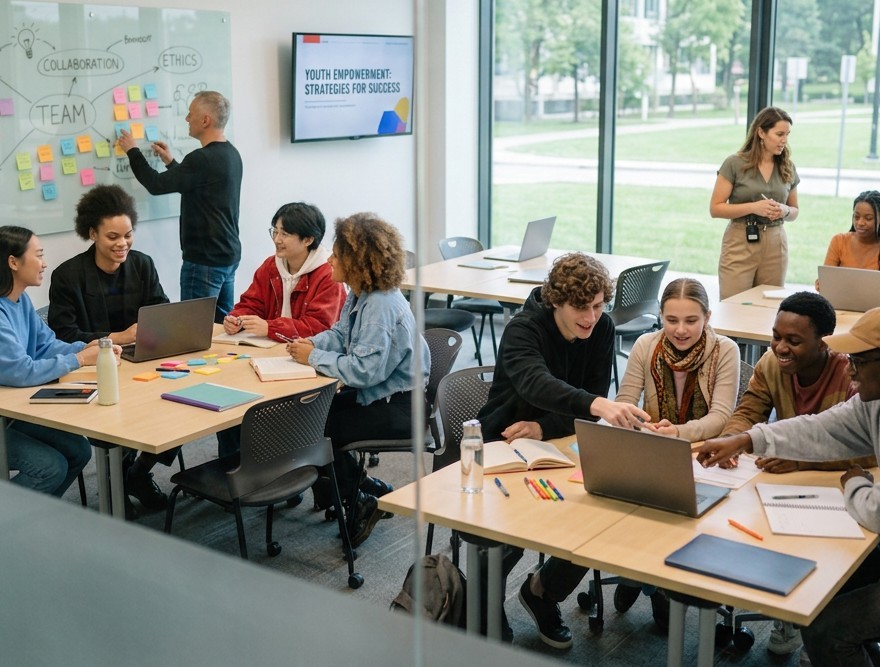
An immersive entrepreneurship sprint where young people work in teams to build, test and pitch a real start-up concept. Participants form a Practice Enterprise (PE) taking on real company roles, managing day-to-day operations, and trading with other enterprises across a global network, all within a structured, mentor-supported environment.

Ages 14–18 All experience levels welcome Seoul, South Korea
Apply now

Summer track

Build the peace you want to see.

For four weeks, trainees make peace their business by building ventures that serve people and communities. The 2027 theme, Social Entrepreneurship, challenges them to identify solutions the world needs to heal.

Schedule

  • Cohort A: June 21 – July 17
  • Cohort B: July 19 – August 13
  • Monday to Friday
  • 9 am to 3 pm KST

Program details

  • 📚4 weeks, 20 sessions
  • 👥Minimum 6 trainees, maximum 10 trainees
  • 📍Location: Yongsan, Mapo, or Itaewon areas
  • 📝Individual and institutional registrations available

Training

  • AI in the workplace
  • EPOCH awareness training
  • Leadership workshop
  • Intercultural dialogues

Practicum at a glance

Practicum information

4-Week Schedule

Weeks 1–2 · Foundation

Build the Brand

Trainees define their product or service, establish team roles and responsibilities, develop their brand identity, and map out their business model from the ground up.

Weeks 3–4 · Operations

Build & Operate

The business goes live. Trainees finalise their offering, serve real or simulated customers, manage their operations day-to-day, and respond to real-world challenges.

Final Days · Closing

Pitch, Reflect & Celebrate

Teams present to a panel, sharing results and lessons learned. The camp closes with structured reflection and a celebration of what each trainee has accomplished.

Typical Day

9:00 – 10:30
Session 1
10:30 – 10:40
Break
10:40 – 12:10
Session 2
12:10 – 1:00
Lunch (provided)
1:00 – 2:30
Session 3
2:30 – 3:00
Learning reflections

Why reflections matter: each day ends with time to step back and connect the day's work to what was learned — building the self-awareness that helps trainees apply these lessons long after the camp ends.

  • Mini-breaks built into each session
  • Refreshments and lunch provided throughout the day

What trainees learn

Training Program

Alongside building their venture, trainees take part in a training program covering AI in the workplace (foundations and ethics), EPOCH awareness training (the five human capabilities most resilient to AI: Empathy, Presence, Opinion, Creativity, and Hope), leadership workshops, and intercultural dialogues.

AI in the Workplace

Foundations and ethics of artificial intelligence — how it's changing work, and how to use it responsibly and effectively.

EPOCH Awareness Training

Build the five human capabilities most resilient to AI: Empathy, Presence, Opinion, Creativity, and Hope — grounded in MIT Sloan research.

Leadership Workshops

Practical leadership sessions covering communication, decision-making, team dynamics, and leading with purpose.

Intercultural Dialogues

Structured conversations that build cross-cultural awareness, perspective-taking, and the ability to collaborate across difference.

How trainees learn

Practice enterprise — learning by doing.

A Practice Enterprise is a real business built for learning. Instead of studying entrepreneurship, trainees form a team, take on real roles, and run an actual venture for four weeks — facing real decisions and real deadlines, and walking away with real work to show for it.

What trainees gain

Skills. Confidence. Real-world experience.

Start-up Lab Camp gives young people hands-on experience of how businesses operate, developing skills, competencies and experience employers consistently look for.

Communication & confidence

Confidence presenting their ideas clearly, pitching to stakeholders, and speaking up in a team.

Cross-cultural fluency

Collaboration and cooperation skills necessary to navigate different perspectives and intercultural dialogues.

Business fundamentals

Practical understanding of how a business works — from defining a product or service to managing roles, operations, and budgets.

Teamwork & leadership

Leadership experience taking on a real role, sharing responsibility, and leading a team through real decisions.

Training certificate

A certificate of completion and evidence for their portfolio useful for college applications, jobs, or future programs.

Networking Opportunities

Access to a global community of practice enterprises and young entrepreneurs through the PEN Worldwide network.

How to apply

Start-up Lab Camp is open to young people aged 14–18. Applications can be submitted by a parent or guardian on behalf of their teens, or by an educator looking to bring the practicum to a full student cohort at their school or institution.

On behalf of a teen

Parents & guardians

Apply on behalf of your teen. We'll walk you through what the practicum involves and what to expect.

  • Fee: ₩450,000 per week
  • Lunch and refreshments provided
  • Trainee performance report
Register my teen
Institutional application

Schools & institutions

Bring Start-up Lab Camp to your students. Schools can apply to run a dedicated cohort for their student group.

  • Fee: Contact us for more information
  • Fits your existing school calendar
  • Summer track or semester track available
Apply as a school

FAQ

Common questions

Who is the Start-up Lab Camp for?

The camp is open to young people aged 14 to 18. No prior business experience is needed; just curiosity, a willingness to collaborate, and an interest in building something real. All sessions are conducted in English.

What does "practicum" mean — how is this different from a class?

EPOCHA practicums are structured learning experiences where trainees apply their knowledge to real projects under the coaching, mentoring, and guidance of EPOCHA professionals and mentor companies.

What is the 2027 theme, and will it change each year?

The 2027 theme is Social Entrepreneurship. Trainees will build businesses designed to create social or community value. The annual theme shifts each year to reflect current global conversations, giving returning trainees a fresh challenge.

How many trainees are in each cohort?

We keep cohorts small with a maximum of 10 trainees. This means every participant gets meaningful mentor time, a real team role, and genuine responsibility within their business.

What are the EPOCH capabilities, and why do they matter?

EPOCH stands for Empathy, Presence, Opinion, Creativity, and Hope — five human capabilities identified by MIT Sloan researchers as most resilient to AI substitution. As automation reshapes work, these are the skills that will distinguish people in any career. Our training programme is built around developing them deliberately.

Is the programme suitable for students without business or tech experience?

Yes, completely. We design the practicum to be accessible to motivated students at any starting point. Trainees come with different strengths — creative, analytical, social, technical — and teams are built to reflect that diversity. We meet participants where they are.

What language is the programme delivered in?

All sessions are conducted in English. This makes the practicum particularly well-suited to students at international schools and those looking to develop professional English in a working context.

How do I enrol — and what's the difference between parent and school registration?

Parents or guardians can enrol directly at ₩450,000 per trainee per week. If you're interested in a school partnership, fill out the application form and we will contact you.

How does the school application work?

Schools can apply to run a dedicated cohort for their students. Once your application is submitted, the EPOCHA team will reach out to discuss format, scheduling, and how the practicum fits into your institution's calendar.

Will trainees receive a certificate?

Yes. All trainees who complete the four-week programme receive a certificate of completion from EPOCHA / PEN Worldwide. Completion work also contributes to a professional portfolio trainees can use in future applications and interviews for Higher/Further Education.

Where exactly will the camp be held?

The venue is in central Seoul, in areas such as Yongsan, Mapo, or Itaewon. Chosen for proximity to the international school communities most of our trainees come from, and for easy subway access from across the city.

What does a typical week look like?

Each week combines workshops, team work sessions, and structured tasks tied to each participant's role. Expect a mix of learning, doing, and reflecting.